


Carbery Biodiversity Study Reveals Nearly One Fifth of Supplier Landscape Dedicated to Nature
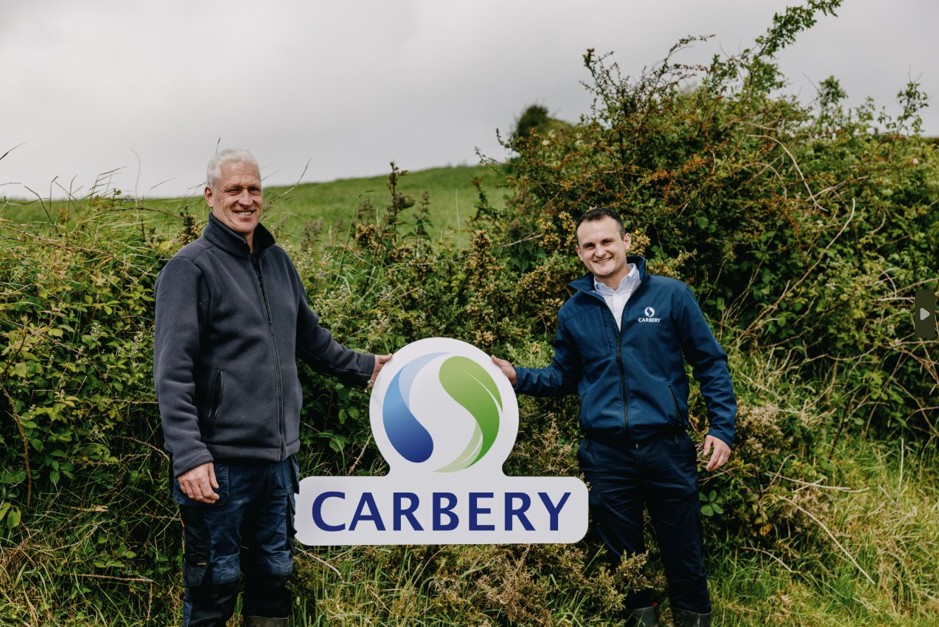
Carbery Group, the global food and ingredients producer, headquartered in West Cork, has completed one of the largest biodiversity assessments undertaken across an Irish dairy supplier base, revealing that more than 19% of the landscape across its supplier farms is dedicated to nature-rich habitats.
The study, commissioned by Carbery and delivered in partnership with environmental technology company ODOS Tech, analysed 980 farms across the company’s supplier network, representing almost 90% of Carbery’s milk suppliers. The assessment mapped more than 64,800 hectares of farmland and identified 12,583 hectares of biodiversity-supporting habitats including hedgerows, woodlands, scrub, broadleaf habitats and semi-natural grassland. This area of Space for Nature is larger than Dublin City and equivalent to more than 17,800 soccer pitches.
Alongside the 12,583 hectares of Space for Nature, the assessment identified almost 4,800 kilometres of hedgerows across Carbery supplier farms. Stretching further than the distance from Ireland to Boston, these hedgerows play a vital role in supporting biodiversity, connecting habitats and storing carbon.
The findings provide Carbery with its first comprehensive biodiversity baseline across its supplier base and highlight the significant natural assets already being managed by farm families throughout West Cork. Carbery plans to use the findings to inform future biodiversity initiatives and support farmers in maintaining and enhancing habitats across the region.
The project has its origins in Carbery’s Farm Zero C programme at Shinagh Estates, where biodiversity mapping work first highlighted the extent of nature-rich habitats present on dairy farms. That research ultimately evolved into a scalable technology platform developed by ODOS Tech, enabling biodiversity to be measured consistently across hundreds of farms.
The findings are particularly noteworthy in the context of the EU Biodiversity Strategy, which includes a target for at least 10% of agricultural area to be occupied by high-diversity landscape features by 2030. The assessment found that more than 19% of the landscape across Carbery supplier farms consists of Space for Nature habitats, while each of the four Carbery Co-operatives exceeded the 10% target.
Enda Buckley, Director of Sustainability, Carbery Group, said:
“We commissioned this project to better understand the biodiversity resource that exists across our supplier base and to establish a clear evidence base for future action.
The findings are encouraging. The EU Biodiversity Strategy includes a target of 10% high-diversity landscape features on agricultural land by 2030, and this study found that more than 19% of the landscape across our supplier farms consists of nature-rich habitats.
Importantly, the study gives us a robust measure of biodiversity across almost 90% of our supplier base and establishes a strong foundation for future biodiversity initiatives.”
Professor Jane Stout, Professor of Ecology at Trinity College Dublin, ODOS Scientific Advisor and Co-Founder of the All-Ireland Pollinator Plan, welcomed the findings:
“It’s great to see that this analysis shows nearly one fifth of farmland is space for nature. We should celebrate and maintain this in our productive landscapes, and ensure that this space is managed to support farmers, communities and healthy thriving ecosystems.”
Jason Hawkins, CEO, Carbery Group, said:
“This study highlights something many of us have long recognised: productive dairy farming and nature can thrive together.
The findings showcase the significant biodiversity resource that exists across our supplier base and the important role farming families play in maintaining it. As we look to the future, protecting and enhancing these natural assets will remain an important part of building a sustainable and resilient dairy sector.”
Cian White, Co-Founder of ODOS Tech, said:
“Carbery farmers are stewards of a nature-rich landscape. Our measurements simply put a number on what they already know. At more than 19%, the Space for Nature across the Carbery supplier base is well above what you would typically expect in a productive dairy region and proves that milk production and nature can thrive side by side. It’s an asset worth protecting for the next generation.
Having worked with Carbery through the Farm Zero C programme over the past six years, this project has been particularly rewarding. Coming from an environmental background, I was genuinely surprised by the amount of nature present on dairy farms when I first began mapping habitats at Shinagh.”
The findings provide Carbery with its first comprehensive biodiversity baseline and highlight the significant contribution farming families are already making to biodiversity across the West Cork landscape.
company news